
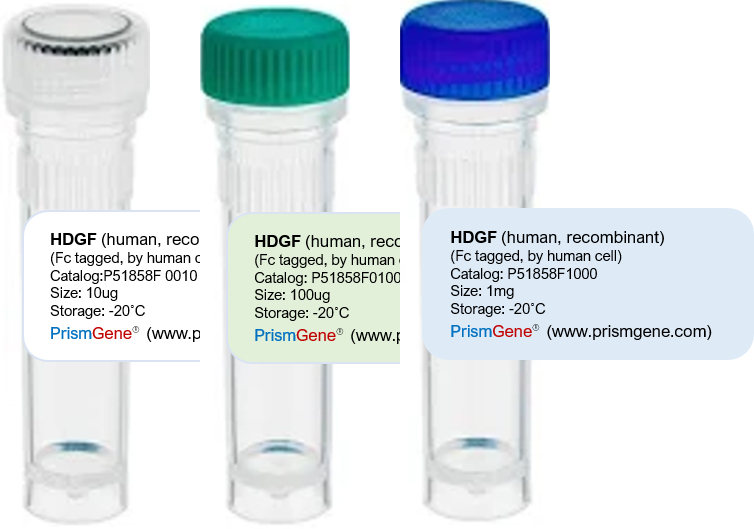
HDGF


Price range: $295.00 through $2,495.00
Fusion Tag: C-terminal human Fc
Protein Full Name: Human hepatoma-Derived Growth Factor (HDGF)
Alternative Names: HDGF, HMG-1L2, High mobility group protein 1-like 2
Uniprot ID: P51858
Amino Acids: aa 1-240, plus C-terminal human Fc
Source: Recombinant, expressed in human cell, HEK293
Predicted Molecular Weight (WM): 52.8kDa
SDS-PAGE: 70kDa, reducing condition
Purity: >95%, by SDS-PAGE with Coomassie® Blue Staining.
Endotoxin Level: <1.0 EU/μg of protein
Hepatoma-Derived Growth Factor (HDGF) is a multifunctional, 26-kDa heparin-binding protein originally isolated from human hepatoma cells.
HDGF is a glycoprotein consisting of 240 amino acids encoded on chromosome 1q23.1. Its primary structural feature is a highly conserved N-terminal HATH (Homologous to the Amino Terminus of HDGF) region, which contains a PWWP domain. This domain facilitates specific interactions with DNA, RNA, and methylated histones. It also contains functional nuclear localization signals (NLS) alongside a unique C-terminal region that regulates non-classical secretion via phosphorylation.
HDGF displays unique dual-localization mechanics, functioning via intracrine, autocrine, and paracrine pathways:
- Nuclear Regulation: Inside the nucleus, it binds chromatin to regulate gene transcription, acts as a transcriptional repressor, and aids in DNA repair.
- Extracellular Signaling: When secreted, it binds to surface receptors like nucleolin or interacts with extracellular matrix heparin. It triggers PI3K/Akt and MEK/ERK cascades, promoting cellular proliferation, tissue remodeling, and angiogenesis while inhibiting apoptosis.
Application:
- Prognostic Biomarker: HDGF is vastly overexpressed in multiple solid malignancies, including hepatocellular carcinoma (HCC), non-small-cell lung cancer (NSCLC), pancreatic, and prostate cancers. High expression directly correlates with advanced tumor stage, lymphovascular invasion, chemoresistance, and poor overall survival.
- Therapeutic Target: Inhibiting HDGF via monoclonal antibodies, miRNA silencing, or small molecules (such as Vitamin K2) halts tumor growth and prevents metastasis. It is also actively studied in benign fibroproliferative conditions like idiopathic pulmonary fibrosis and keloids.
- Tissue Repair and Fibrosis: Beyond oncology, HDGF’s role in tissue remodeling positions it as a focus in regenerative medicine and fibroproliferative diseases, such as pulmonary fibrosis and abnormal wound healing (keloids).
| size | 10ug, 100ug, 1000ug |
|---|
Be the first to review “HDGF”
Related products




Reviews
There are no reviews yet.