
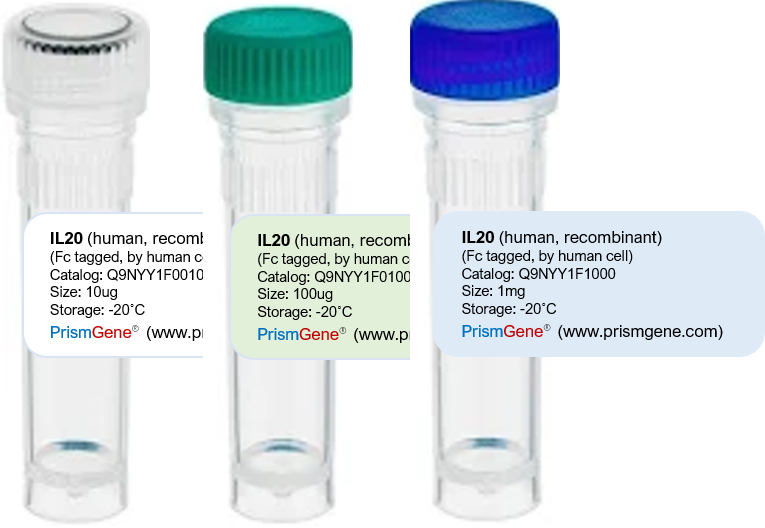
IL20

Price range: $295.00 through $2,495.00
Fusion Tag: C-terminal human Fc
Protein Full Name: Human Interleukin-20
Alternative Names: IL-20, Cytokine Zcyto10
Uniprot ID: Q9NYY1
Amino Acids: aa 25-176, plus C-terminal human Fc
Source: Recombinant, expressed in human cell, HEK293
Predicted Molecular Weight (WM): 41.4kDa
SDS-PAGE: 50kDa, reducing condition
Endotoxin Level: <1.0 EU/μg of protein.
Activity: Active
Human Interleukin-20 (IL-20) is a soluble, secreted protein that belongs to the IL-10 cytokine family. Structurally, IL-20 adopts an α-helical four-helix bundle fold typical of its family. It functions by binding to two distinct cell-surface heterodimeric receptor complexes:
- Type I complex: Consists of subunits IL-20RA and IL-20RB.
- Type II complex: Consists of subunits IL-22RA1 and IL-20RB.
IL-20 is primarily produced by activated monocytes, dendritic cells, and keratinocytes. Since its receptors are expressed on non-hematopoietic structural cells (like epithelial and endothelial cells), it acts as a crucial bridge between immune responses and tissue remodeling.
Upon binding to its receptor complexes, IL-20 activates the downstream JAK/STAT signaling cascade (specifically activating STAT3 and STAT5), alongside the MAPK, AKT, and ERK1/2 pathways. These cascades drive several key homeostatic and pathological processes:
- Epithelial Regulation: It stimulates the proliferation and differentiation of keratinocytes to maintain skin barrier integrity and promote wound healing.
- Angiogenesis: It acts as a potent pro-angiogenic and vascular remodeling factor.
- Inflammation: It triggers the production of other downstream pro-inflammatory mediators and chemotactic factors.
Because dysregulated IL-20 signaling promotes hyperproliferation and chronic inflammation, it serves as a valuable biomarker and therapeutic target for multiple diseases:
- Psoriasis: IL-20 is heavily upregulated in psoriatic lesions. Targeting it helps reduce skin thickening and localized inflammation.
- Rheumatoid Arthritis (RA) & Bone Loss: It accelerates joint destruction and radiographic disease progression in RA.
- Other Inflammatory Diseases: Elevated levels are implicated in atherosclerosis, liver fibrosis, non-alcoholic fatty liver disease (NAFLD), and central nervous system neuroinflammation.
- Oncology: IL-20 promotes progression, stemness, and metastasis in cancers like breast and pancreatic cancer.
Consequently, anti-IL-20 monoclonal antibodies (such as Fletikumab) have been researched in clinical trials to neutralize this cytokine, offering an innovative biological therapeutic approach for managing auto-inflammatory disorders and tumor progression.
| size | 10ug, 100ug, 1000ug |
|---|
Be the first to review “IL20”
Related products


Reviews
There are no reviews yet.